Deployment Modes
1. Deployment principles
Prodia supports deployment patterns ranging from a single-line pilot to multi-factory rollout. The goal is to balance security, rollout speed, cost, and scalability.

2. Typical deployment patterns
| Mode | Description | Best-fit scenario |
|---|---|---|
| Standard dual-node | Central analysis node + edge data node | Single line, small factory, rapid validation |
| 1:N workshop topology | One hub with multiple edge nodes | Multi-line or multi-zone unified analytics |
| 2:N high-availability topology | Dual central nodes with multiple edge nodes | Mission-critical operations and high reliability requirements |
3. Integration approach
Prodia typically enhances existing systems rather than requiring system replacement.
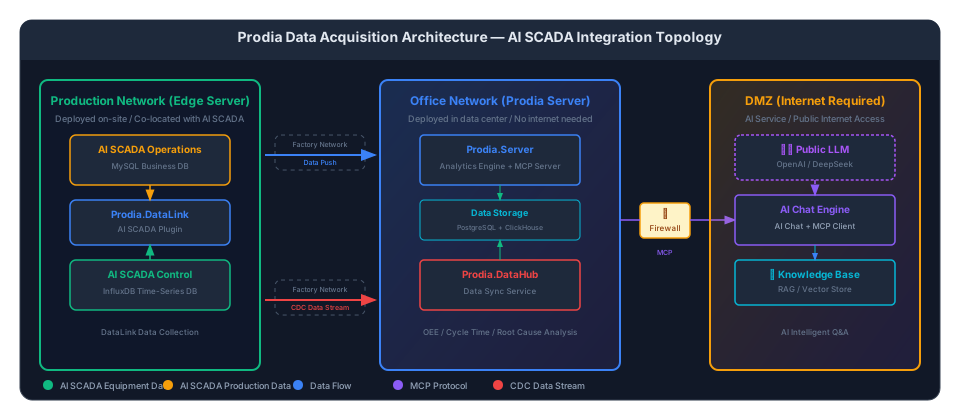
Typical integration targets:
- AI SCADA
- MES or other execution systems
- equipment and PLC data
- databases and data platforms
4. Common deployment questions
Can it start with a pilot?
Yes. Prodia is well suited to start from one production line and one scenario, then expand.
Can it scale to factory-level architecture?
Yes. The hub + edge model supports workshop-level and factory-level scale-out.
How long does deployment take?
It depends on data readiness, scope, and project coordination. For pilots with clear boundaries, a fast pilot path is usually feasible.
5. What should be clarified before deployment planning
Before deployment planning, teams should usually clarify:
- What data systems already exist on site
- Which business problems the pilot should prioritize
- What the expectations are for data security, network isolation, and availability